

 SIR Art Journal
Photography / Visual Essay
A Topography of Silence
A Different View of Cappadocia

SIR Art Journal
Editor’s note
Cappadocia is one of those places whose image precedes the place itself. Its rock formations, valleys and familiar viewpoints are already lodged in our visual memory. Ali Ilgazlı’s photographs attempt to move beyond that familiar image.
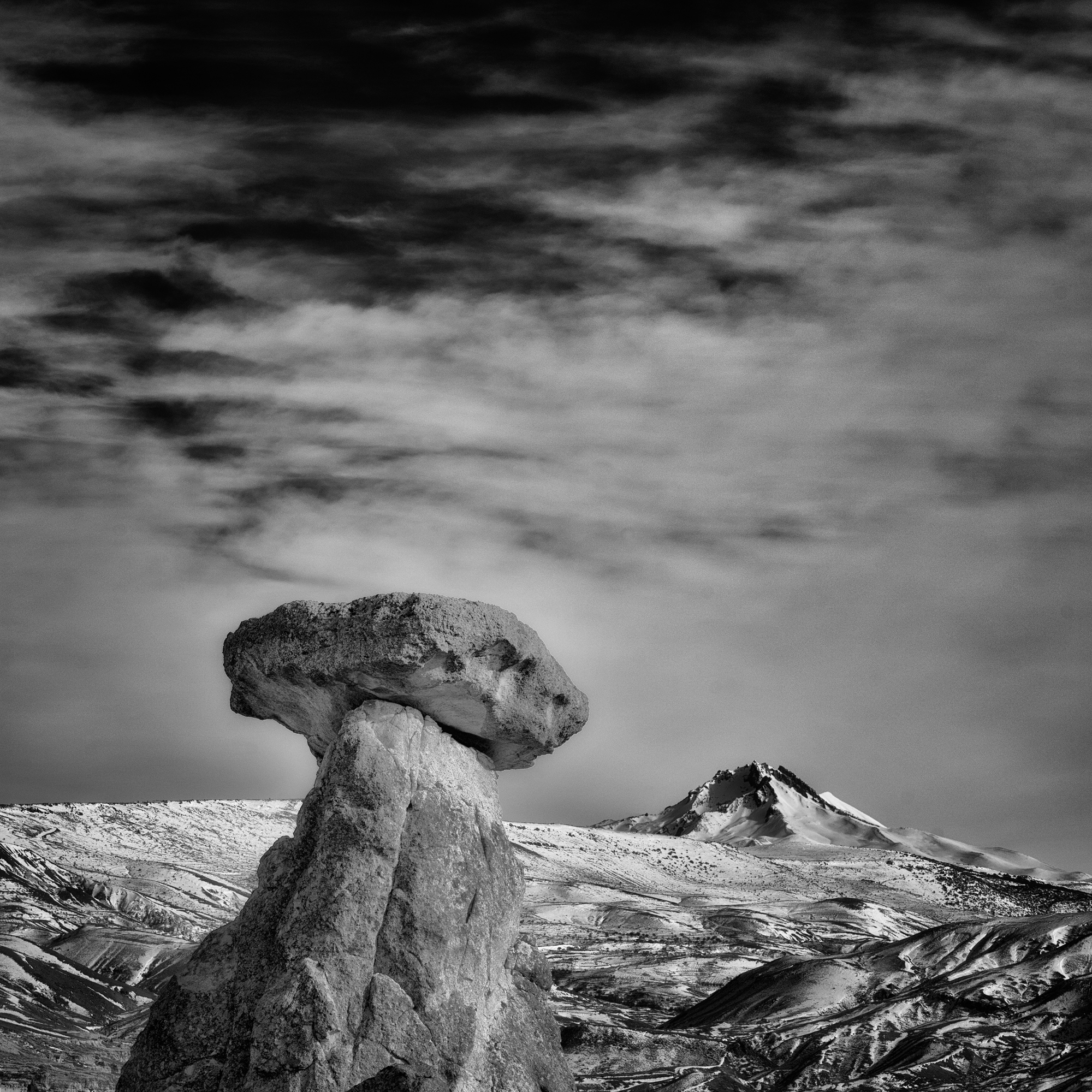
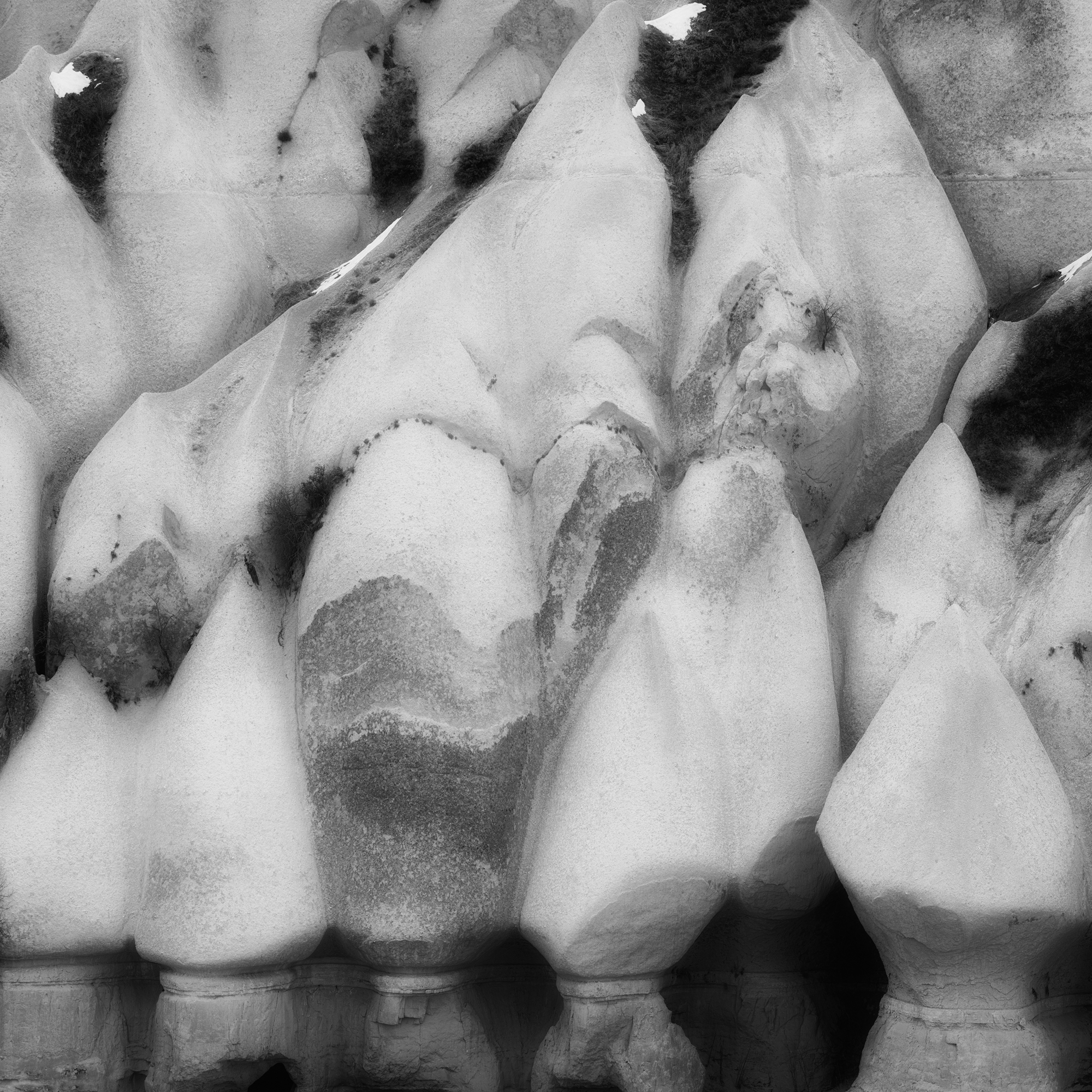
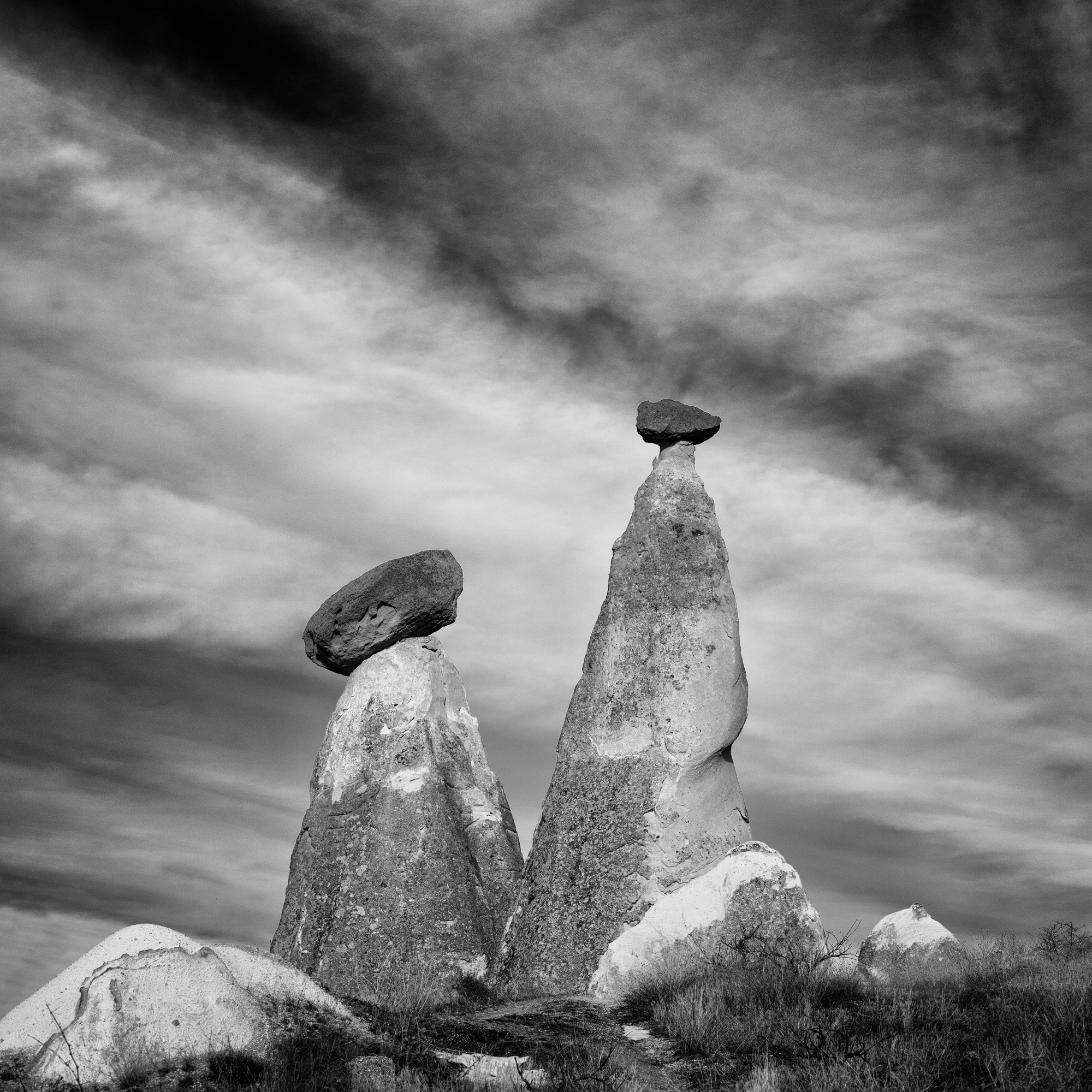
By moving human activity and everyday life away from the centre of the frame, the photographer directs our attention towards the forms of the landscape. With their own weight, curves and shadows, rock surfaces become the principal subject of the image.
The choice of black and white plays a decisive role here. As colour recedes, the texture of stone, the trace of light on its surface and the relationships between forms become more visible. In some frames, geological formations resemble sculptures; in others, they become abstract structures whose scale is difficult to determine. The curves that erosion has opened in their surfaces carry the eye beyond a single moment, towards a transformation unfolding over long spans of time.
The silence Ilgazlı proposes opens a space for thinking about the people, time and lived experience that remain unseen in the photographs. Within this space, the viewer can observe the relationships that forms establish with one another.
A Topography of Silence explores the possibilities of looking again at a place we think we know well. The shifting scale, from close surfaces to a distant horizon, invites us to reconsider our habits of seeing Cappadocia.
SIR Art Journal Editör Notu

Ali Ilgazlı · Artist’s text
A Different View of Cappadocia
Cappadocia is the visible form of a history that has reached us from millions of years ago. It holds a wealth of geological, sociological, political and strategic detail. In art, too, traces of the past, artistic endeavours and valuable works by artists can be found both in this vast open-air museum and in various libraries and collections.
Cappadocia is also a vast landscape that has been photographed extensively. Its structure and character make it particularly challenging to photograph. In photographing Cappadocia, I tried to approach it with a different idea and a different kind of effort.
I wanted to move away from the human figure and the bustle of everyday life, and turn towards form. I tried to read, to see and to contain within the frame Cappadocia’s mystical, legendary power: immense, yet calm.
My aim was to help Cappadocia enter into a quiet dialogue with you, and to help you travel through time. I wanted you to place the figures of history within these frames and let your imagination bring them to life.
When you step away from the lively bustle of tourism and commerce in Cappadocia, you can indeed encounter an entirely different, mystical world.
On working with Ersin Alok
Among the things I gained from my mentor Ersin Alok was an understanding of the fundamentals of black-and-white photography. I can express this briefly as “creating and preserving detail in both blacks and whites.” This is difficult to achieve. Yet, for me, it is precisely the quality that places black-and-white photography ahead of colour photography.
Another thing I gained was an understanding of the importance of balancing light and dark masses within a photograph. Working with him, I learned how powerful framing could be and how dramatic its effects could become. The foundations of my approach to composition, which I later also explored through concepts such as the golden ratio, were laid in those years.
In abstract and nature photography, too, he was the most prominent master photographer in our circle. Being with him every day, working alongside him and being the first person after him to see those beautiful works was immensely valuable to me.
Ali Ilgazlı

About the photographer
Ali Ilgazlı began taking photographs at an early age, mixing his own black-and-white processing chemicals and printing on Forte paper. In the mid-1970s, he worked as an assistant to Ersin Alok. Later also working in digital photography, Ilgazlı focuses primarily on landscape and abstract photography.
Text and photographs: Ali Ilgazlı · Editorial text: SIR Art Journal Editör Notu